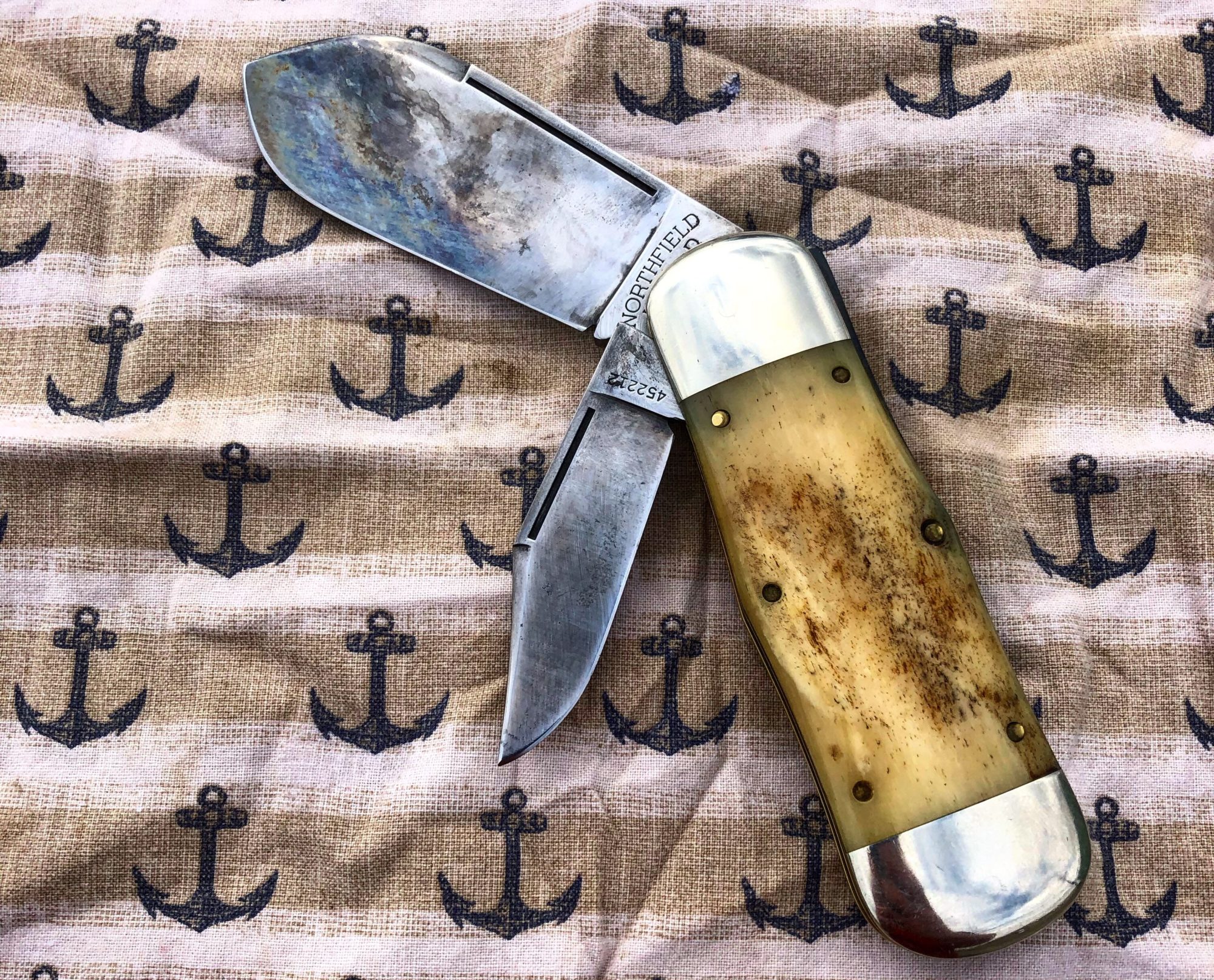


Traditional knives and fountain pens have seen a resurgence in recent years, both among collectors and everyday users. At first glance, that resurgence is hard to explain. These tools are slower, more demanding, and less convenient than the modern alternatives designed to replace them. Traditional knives usually require two hands to open, are frequently made from maintenance heavy carbon steel, and often don’t include a locking mechanism. Fountain pens require frequent cleaning, prefer certain kinds of paper, and demand more technique to write well.
Why Choose Traditional Knives and Fountain Pens?
Given all of that, why do I and many others still use, collect, and enjoy them? Because both traditional knives and fountain pens place an emphasis on intentionality that modern tools tend to lack.


How do Traditional Knives and Fountain Pens Emphasize Intentionality?
All of the extra work these “archaic” tools require forces the user to be more present in their use. A modern knife, with its pocket clip, lock, and one hand operation can be pulled out, opened, used, and closed almost without a thought. A traditional knife asks more of you. You have to find it in your pocket, maybe remove it from a slip, use both hands to open it, cut with care so it doesn’t close on you, clean it, and then usually use two hands to close it again.
The same contrast exists with pens. Many modern pens are clipped, clickable, and instantly ready to write, using forgiving ballpoint tips and easily replaceable refills. Fountain pens usually require a cap to be removed, must be held at the correct angle and orientation, often involve a more laborious filling process, and need regular cleaning.
Each step slows the process just enough to pull your attention into it, bringing focus to the act itself in a way not unlike a mindfulness practice. Choosing traditional knives and fountain pens turns simple use into active participation.

Why Take Intentionality Over Practicality?
The truth is that most of us do not actually need a knife or a pen on our person at all times. For many of us, carrying these tools is already a choice driven less by necessity and more by enjoyment. Once that is acknowledged, the question shifts. If we are already choosing not strictly for utility, why not choose tools that invite deeper engagement?
Traditional knives and fountain pens introduce friction into actions that modern tools have worked hard to eliminate. That friction is not efficient, but it is meaningful. It asks us to slow down, to pay attention, and to participate in the act rather than merely “get it out of the way”.
In a world optimized for speed, convenience, and disposability, choosing tools that require care to use and maintain can be a subtle but intentional detour from the mundane. Tools that foster intentionality do not just perform a function, they create a moment. Over time, those moments add texture to daily life, turning routine actions into small rituals instead of forgettable tasks.
Traditional knives and fountain pens remind us that not every action needs to be optimized; some are worth experiencing fully.

Pen Ponderings Youtube Playlist
If you enjoy content on knives or pens, you should check out my YouTube channel. I recently created a playlist specifically for videos on pens, which I’ve called “Pen Ponderings”, linked below.

I sincerely thank you for your time, support, and interest! Don’t forget to tell your friends about KnifeThoughts.com, subscribe via email, and share this article on social media. You can find Knife Thoughts on YouTube where I have hundreds of knife videos, as well as on Instagram and Facebook!
- Last Week’ Knife Thoughts 2026-3-2
- 4 Things Modern Knife Enthusiasts Should Know Before Buying Their First Slipjoint
- Last Week’s Knife Thoughts 2026-2-23
- Last Week’s Knife Thoughts 2026-2-16
- Last Week’s Knife Thoughts 2026-2-9
