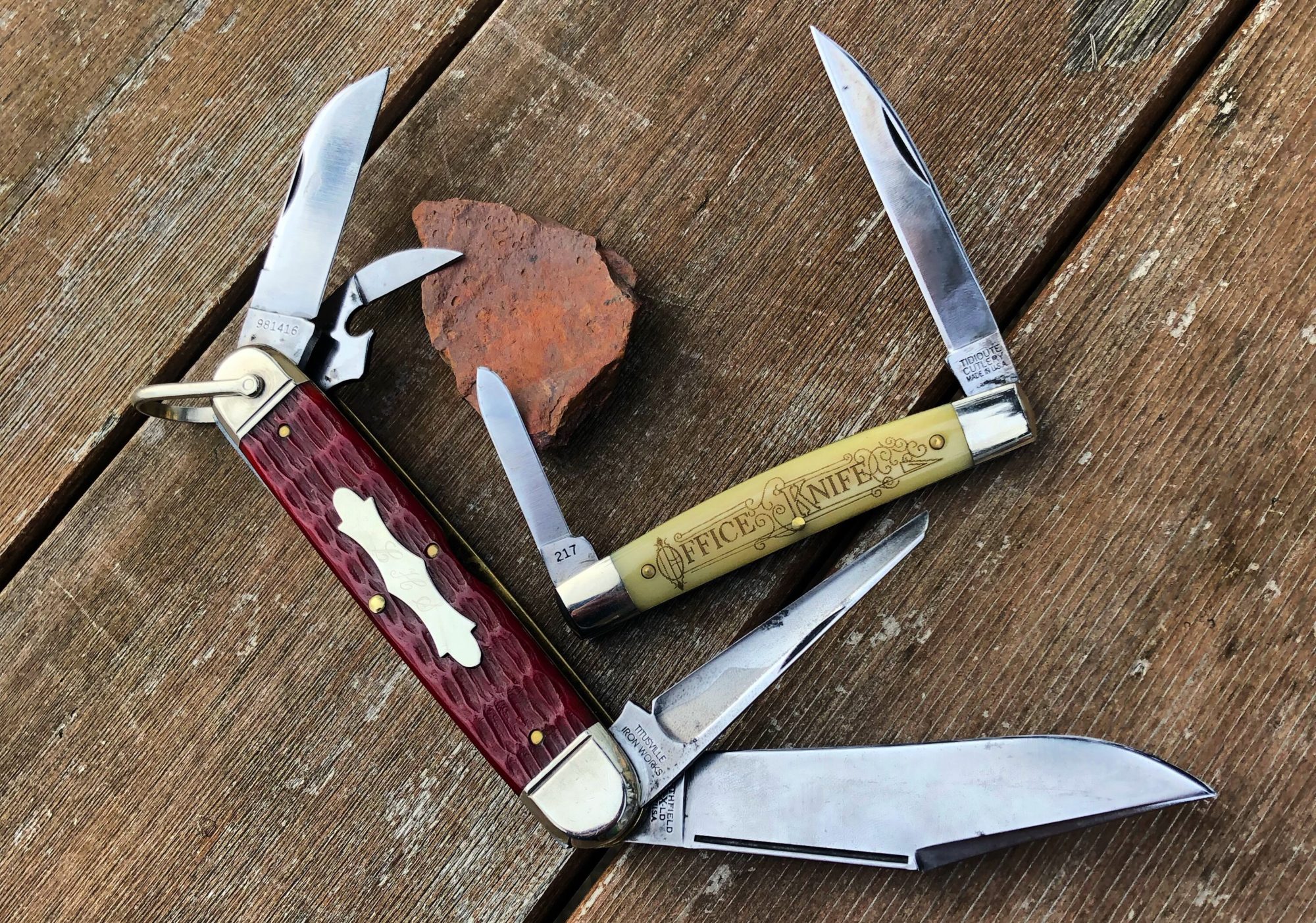


So you’ve decided to try out a slipjoint knife, but don’t know what to expect. Maybe you’re familiar with modern, one hand opening and locking, knives but want to give a classic pocket knife from Case, Great Eastern Cutlery, or Cooper Cutlery a try. In this article I’ll cover 4 things you should know before you get your first (or next!) slipjoint.
What is a Slipjoint?
First off, what is a slipjoint? A slipjoint is a non locking folding knife. From there, things can vary. There are modern slipjoints, which often have screw construction or even can be opened with one hand, but a traditional slipjoint typically has no pocket clip, is opened with two hands, and is constructed with pins. Slipjoints have enjoyed a resurgence as of late in the knife industry. Why (in my opinion)? Firstly, they are often legal in places that locking knives are not and generally less intimidating to “non knife people”. Secondly, they have a great tactile feel and sound when opening and closing that is just satisfying. Finally, they harbor a historical and authentic feel harkens back to fond memories (real or imagined) like grandpa peeling an apple. Just a note, owner of GEC Bill Howard told me that the correct term for what they make is simply a “pocket knife” and that “slipjoint” is itself a modern term. Whatever you call them and whatever has caused the regrowth of interest in slipjoints, they’re a great addition for any knife enthusiast.

1: Simple Steels Abound
Many traditional slipjoints tend to have simple steels. While modern knives, and also many modern slipjoints, often boast matching modern super steels, traditional slipjoints often have carbon steel blades. You’ll want to wipe your carbon steel blades after use and before closing, in order to lessen the incidence of oxidation. Likewise, it’s good to apply a layer of oil before storing the knife for any amount of time, or even just at the end of the day each time you carry a carbon steel bladed knife. Carbon steel blades require more care than stainless steel, but they also develop a patina which can both be protective against harmful rust and many find to be aesthetically pleasing.

2: Pivot Maintenance Matters
Slipjoints rarely have ball bearing pivots, like many modern knives, and most production slipjoints don’t even have washers. For this reason, you’ll want to keep the pivot clear of debris and well oiled. You should check the pivot periodically and clean out any pocket lint or other dirt; I often use a Q-Tip or toothpick. Oiling the pivot will keep it working smoothly and without excess wear; I use simple mineral oil, but any knife oil should work. “Oil the Joints”, as Charlie Campagna’s Waynorth brand knives suggest on their tangs, and your slipjoint should keep its walk and talk for a lifetime.

3: Natural Material Expectations
Many slipjoints have natural materials for their covers, or handle scales, such as wood, bone, and antler. These materials are not as stable as modern synthetic composites, such as G10 or Micarta, and therefore can sometimes shrink, swell, or even crack. While these are still issues and should be addressed, they’re just a possibility that comes with natural materials. Reputable companies like Great Eastern Cutlery, Case, Cooper Cutlery, Jack Wolf Knives, and RoseCraft Blades understand this and stand behind their products, from my own personal experience working with them. If you have an issue with a natural cover material, send the company an email and let them know you heard from Knife Thoughts that they’ll take good care of you. While issues can be more common, natural materials provide a warmth, uniqueness, and charm that just can’t be had with synthetic materials.

4: Disassembly Discouragement
One major difference between slipjoints and modern knives is that disassembling slipjoints is generally heavily discouraged. This tends to be true both with pinned (ie traditionally built) knives and even with screw construction slipjoints, like Jack Wolf Knives. Disassembly is a common enjoyment for modern knife enthusiasts (though I personally avoid it) but, due to the way that most slipjoints work using a backspring to hold the blade open and closed, it is usually quite difficult to reassemble them. This is even more true on pinned slipjoints, where disassembly has an actual destructive element. So the best thing to do to keep your slipjoint in good working order is to keep it clean, oiled, and sharp and use it only for cutting (no prying or lateral pressure on the blade).

Embrace the Slipjoint Experience
Now that you’ve taken in these four points, you’re more than prepared for your first slipjoint! Take the time to appreciate the craftsmanship, the walk and talk, and the history that went into its design. Use it with care and intention and it will bring you a lifetime of enjoyment.
I sincerely thank you for your time, support, and interest! Don’t forget to tell your friends about KnifeThoughts.com, subscribe via email, and share this article on social media. You can find Knife Thoughts on YouTube where I have hundreds of knife videos, as well as on Instagram and Facebook!
Some links in this article are affiliate links. That means that if you click them and purchase the product you won’t pay any more than you normally would, but I get a commission from the sale. This is just a way for you to support Knife Thoughts. Be sure to try my discount codes “KnifeThoughts” or “KT10”!

One Reply to “4 Things Modern Knife Enthusiasts Should Know Before Buying Their First Slipjoint”
Comments are closed.